



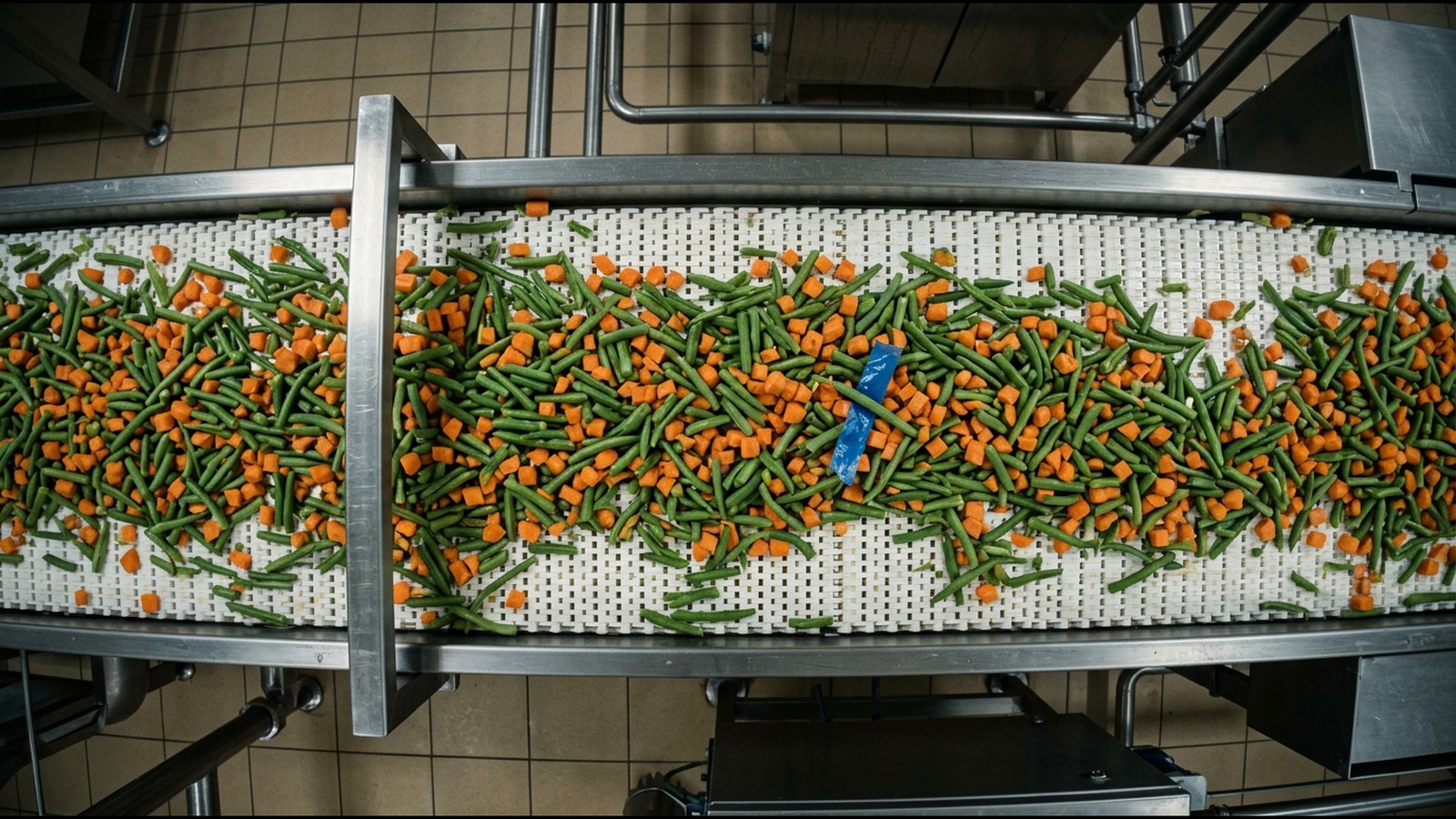
Foreign object detection
Catch contamination automatically at the point it enters the line, without someone watching the belt. Contamination is usually found downstream, through a complaint, a rejection or a recall.
Why it matters.
Contamination is usually found downstream, through a complaint, a rejection or a recall. By then the batch has shipped and the cost has multiplied. Visual checks rely on people watching the belt for hours, which is tiring, costly and easy to miss.
What it detects and measures
- Items that shouldn’t be in the product, such as plastic or glove pieces, as they enter the line
- Exactly where on the line it was seenTo narrow down the source
- The time it enteredTo trace which batch is affected
- How often detections happen, by line and shiftTo show where controls are weak
Typical applications
Set up in four steps.
Self-service, in the browser, on the cameras you already own.
- 01Connect
Uses a camera that can see the infeed or open conveyor. Usually no new hardware.
- 02Set the rule
Choose what counts as foreign for each product, such as plastic or glove pieces.
- 03Measure
Watches every item as it enters the line, every minute of every shift, and flags anything that doesn’t belong.
- 04Act
When something is spotted, the item is flagged with an image and time, and the line lead is alerted to remove it.
What your team gets.
Alerts reach the person who can act, with the time, place and frame. Every event is kept for reporting.
For operations
- Every item checked automatically, with no one watching the belt
- An image and time for every detection, so investigations take minutes, not days
For the business
- Lower risk of recalls, retailer penalties and write-offs
- Stronger food safety evidence for audits and customer assurance
- Protection for the brand by stopping contaminated product before it ships
- Clear data on where controls fail, to target training and investment
- Fewer people tied up in manual inspection; staff step in only when something is found
Often measured on the same cameras.
Cameras on the same line can also check packs and track stoppages, building a fuller picture of line performance.
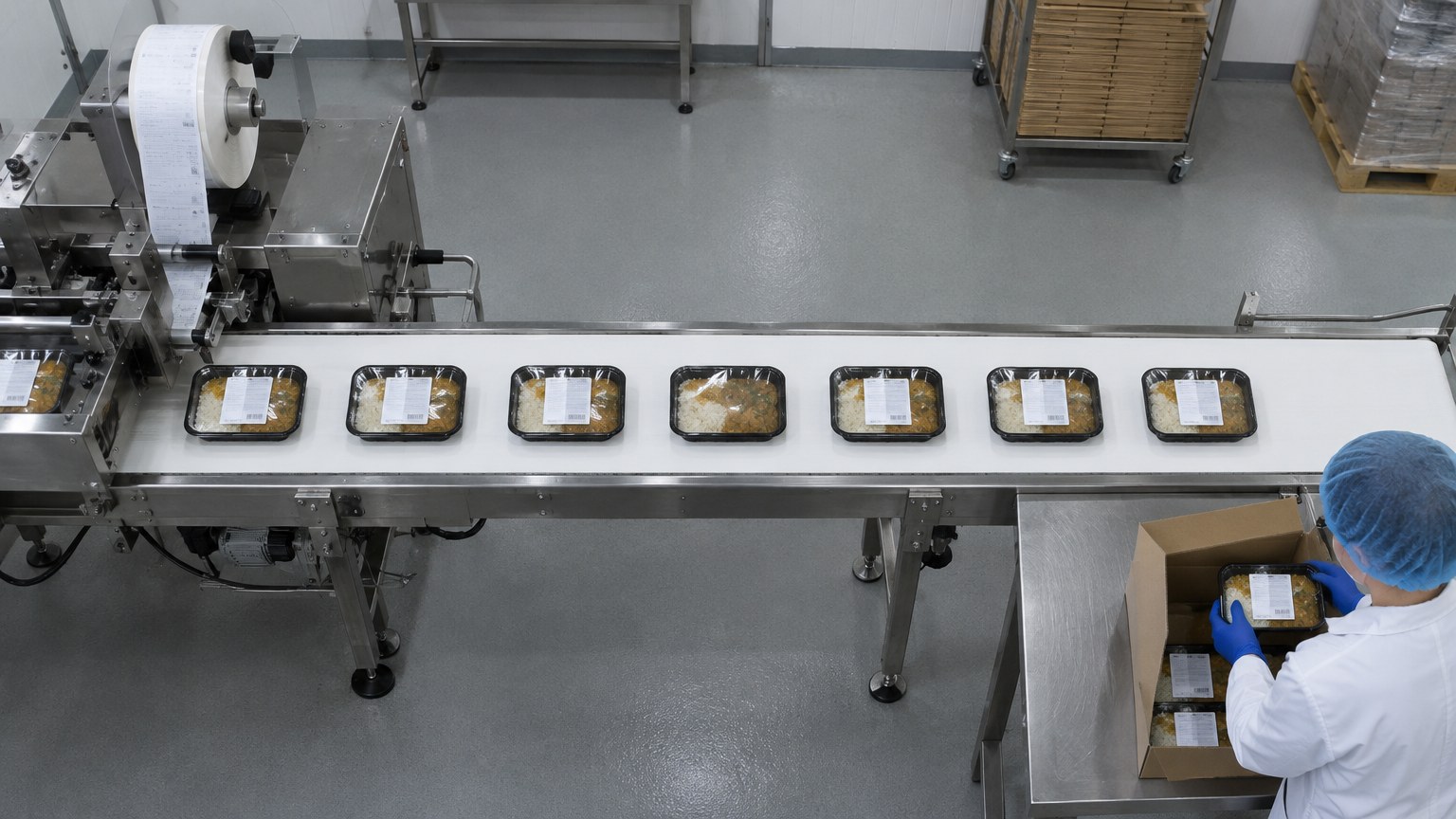
Product appearance and packaging checks
Check every unit’s labels, lids and seals as it passes the camera, so mistakes never reach the customer.
Quality checks and loss preventionView use case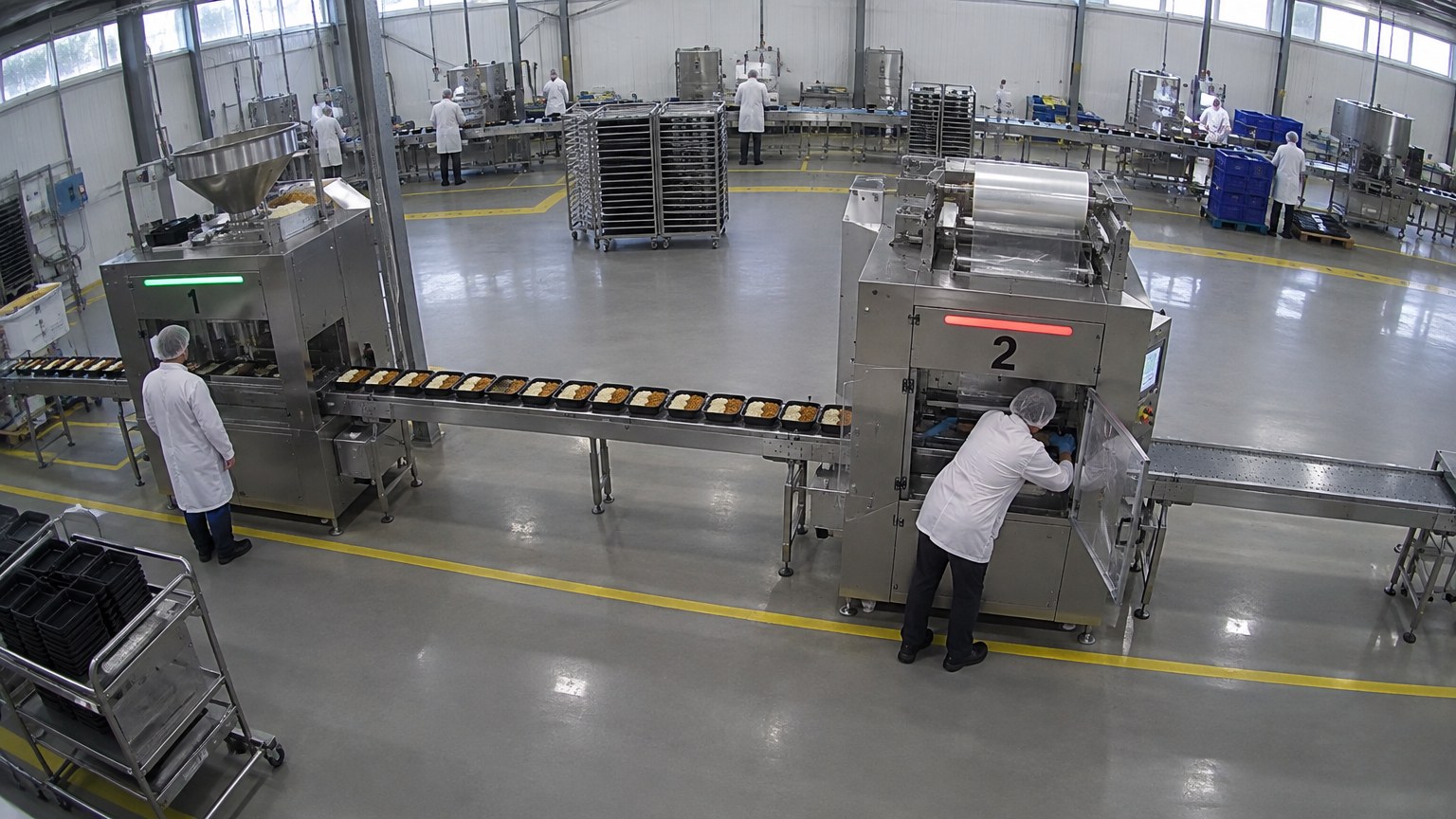
Equipment activity and downtime
Record every time equipment stops, and for how long, so lost production is visible and fixable.
Asset tracking and process monitoringView use case