



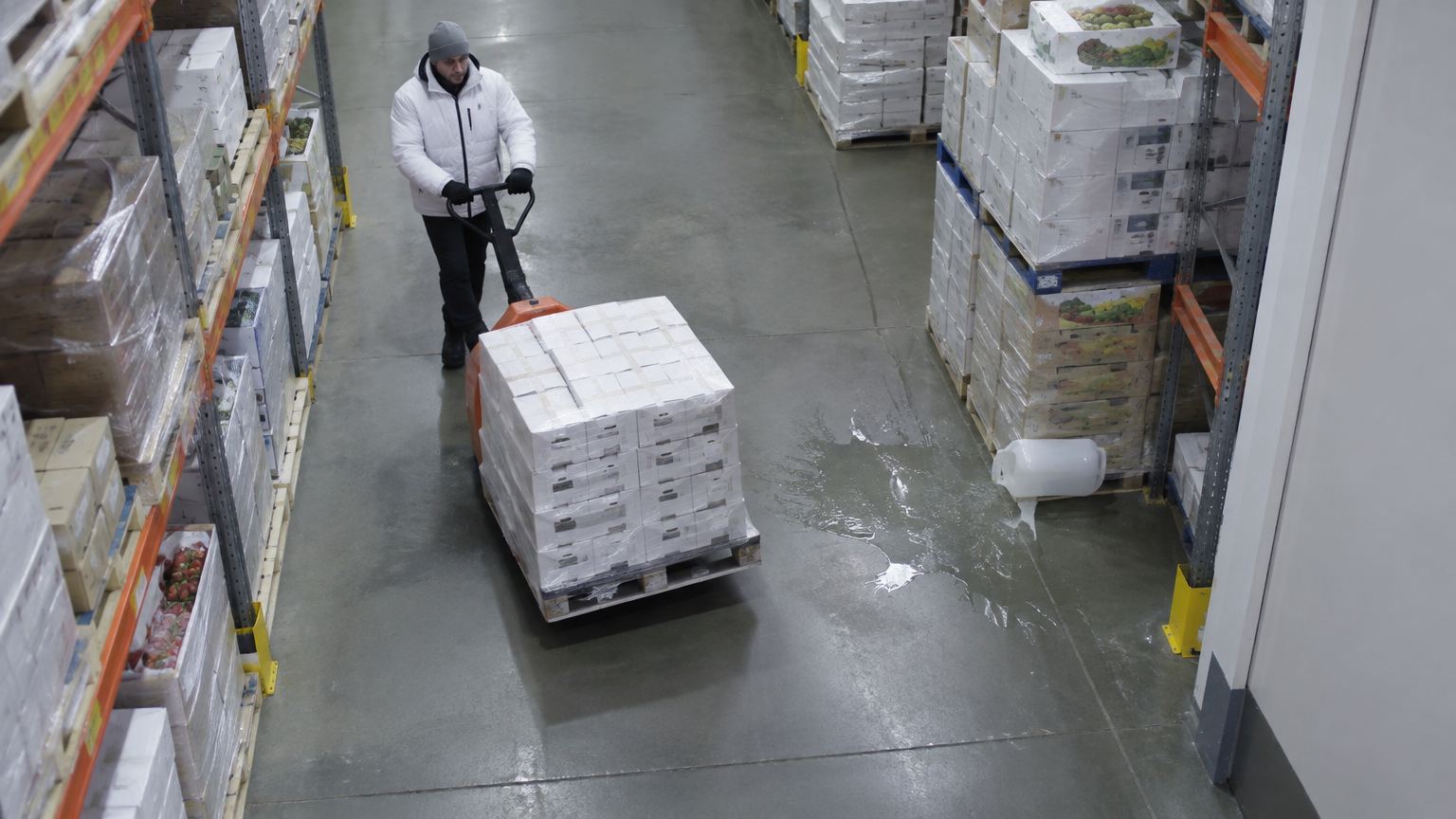
Spill and floor hazard
Spot spills and floor hazards as they happen, so teams can clear them before someone slips. Spills are often found when someone slips, with no record of when they started.
Why it matters.
Spills are often found when someone slips, with no record of when they started. Slips are among the most common workplace injuries, and each one brings costs and claims.
What it detects and measures
- Liquid or material spilled on the floor
- Where the spill is, and how big it is
- How long it takes to clear
- Areas where spills keep happeningTo fix the cause
- Leaking containers or equipment, before they cause bigger problems
Typical applications
Set up in four steps.
Self-service, in the browser, on the cameras you already own.
- 01Connect
Uses the CCTV cameras already looking over the floor area. No new hardware.
- 02Set the rule
Mark the floor areas to watch.
- 03Measure
Watches the floor for spills and tracks how long each one stays.
- 04Act
When a spill is spotted, the cleaning team is alerted with its location.
What your team gets.
Alerts reach the person who can act, with the time, place and frame. Every event is kept for reporting.
For operations
- Spills found when they happen, not after a slip
- Clean-up times recorded for every spill
For the business
- Fewer slip injuries and the claims and lost time that follow
- Evidence of prompt action for insurers and investigations
- Recurring problem areas found and fixed at the source
- Cleaning resources sent where they’re needed, when they’re needed
Often measured on the same cameras.
The same warehouse camera can watch traffic and stock.

Pedestrian and vehicle proximity monitoring
Flag when people and moving vehicles get too close, so near misses are seen and fixed before someone is hurt.
Safety and securityView use case
Asset location and time in storage
Know where your assets are and how long they’ve been sitting there, from pallets and cages to air cargo containers (ULDs), so less stock is lost, wasted or tied up.
Asset tracking and process monitoringView use case