



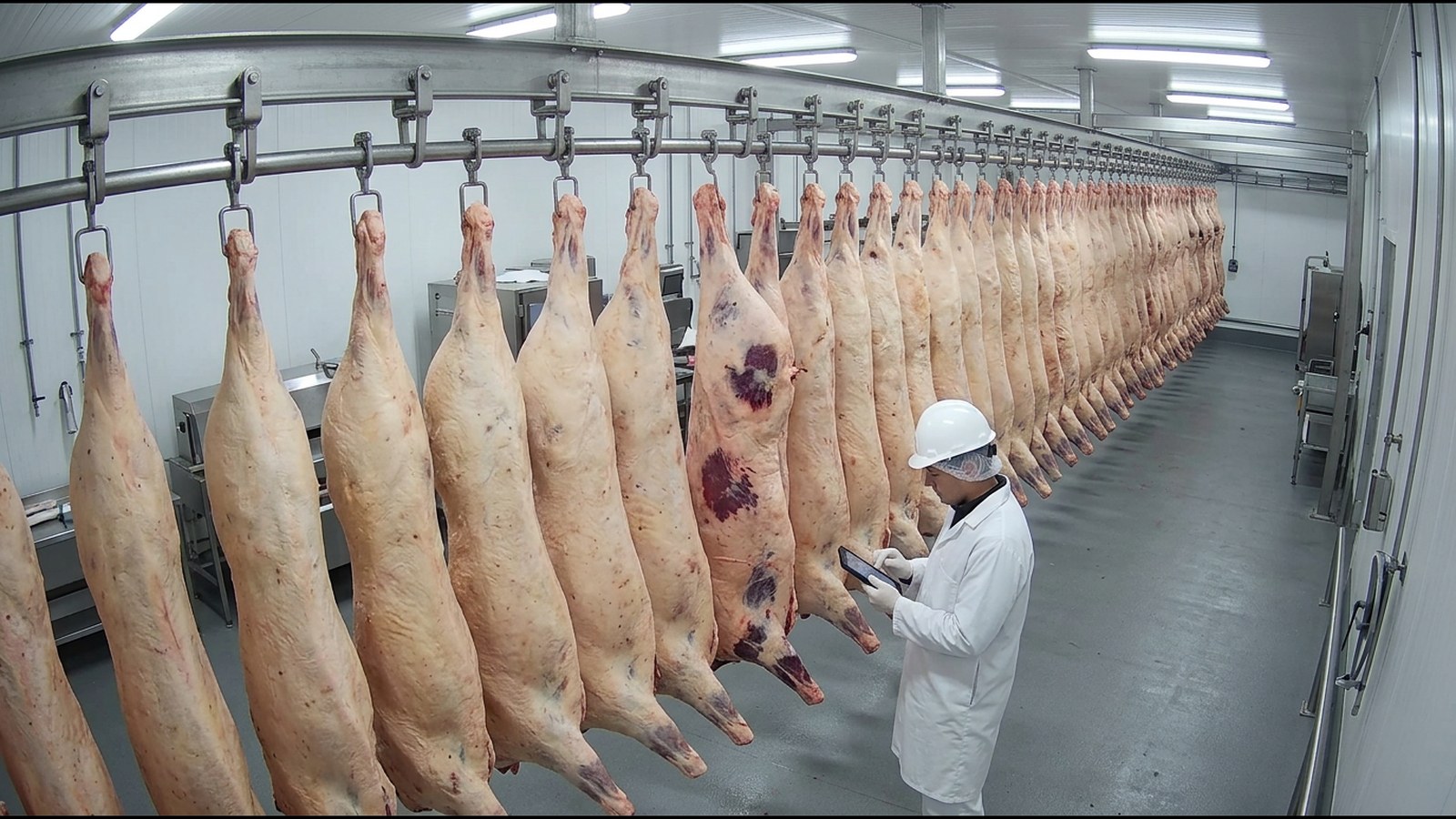
Carcass bruising detection
Detect and count visible bruising on carcasses automatically, for consistent records and less manual inspection. Bruising is checked by eye, which varies between inspectors and shifts, and records are often incomplete.
Why it matters.
Bruising is checked by eye, which varies between inspectors and shifts, and records are often incomplete. That makes it hard to trace bruising back to suppliers or handling.
What it detects and measures
- Visible bruising on each carcass
- How many bruises, and where on the carcass
- Bruising counts per carcass, lot and supplier
- Trends by shift, day and supplier
- An image of each carcass, for review
Typical applications
Set up in four steps.
Self-service, in the browser, on the cameras you already own.
- 01Connect
Uses a camera already positioned for manual review of carcasses.
- 02Set the rule
Choose which parts of the carcass to check, and link each carcass to its lot or supplier.
- 03Measure
Looks at each carcass as it passes, detects visible bruising and counts each occurrence.
- 04Act
When bruising is higher than usual for a lot, the quality team is notified.
What your team gets.
Alerts reach the person who can act, with the time, place and frame. Every event is kept for reporting.
For operations
- Every carcass checked the same way
- Less manual inspection effort
For the business
- Consistent bruising records for grading and supplier discussions
- Problems traced back to suppliers, transport or handling
- Less value lost to trimming over time
- Evidence to support animal welfare standards
Often measured on the same cameras.
The same line cameras can count carcasses and catch contamination.
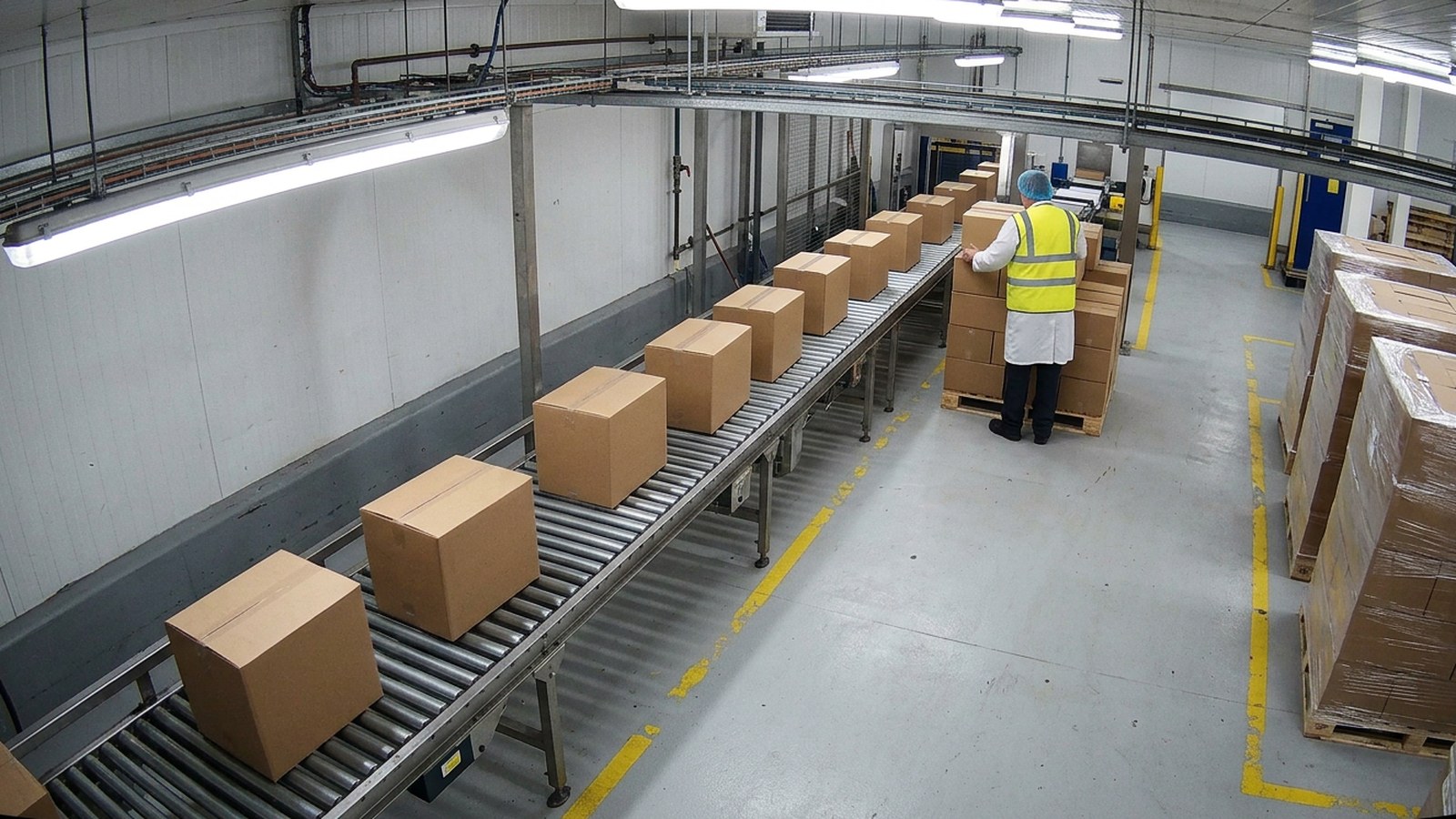
Automated counting
Count items, animals or events automatically from camera footage, so teams stop counting by hand.
Asset tracking and process monitoringView use case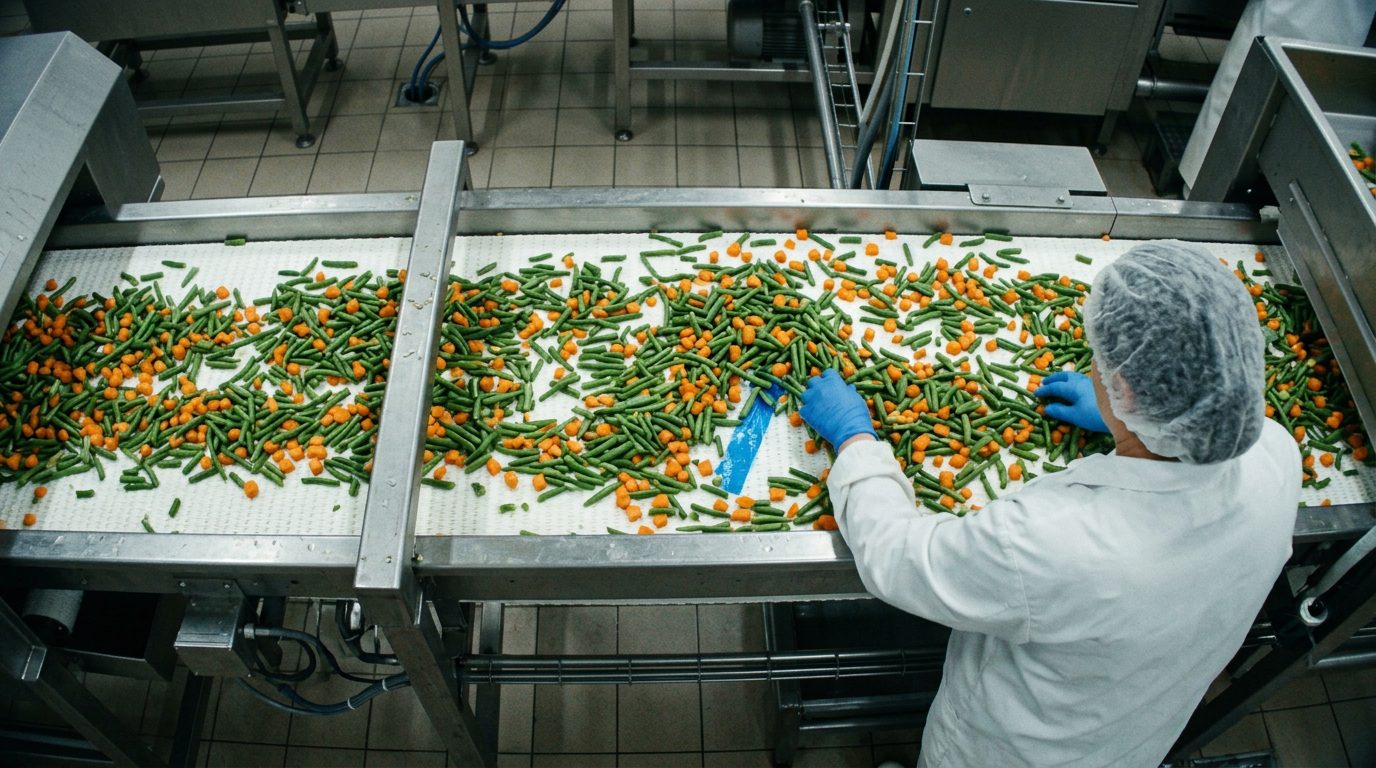
Foreign object detection
Catch contamination at the point it enters the line, before it becomes a recall or a damaged brand.
Quality checks and loss preventionView use case